Handling the morning rush at a small café: line flow, station setup and peak staffing
If your café sells coffee, the morning rush is when the most guests arrive in the least time, and when a mistake costs the most. A guest who waits too long on the way to work doesn't complain. They go somewhere else tomorrow.
The rush is rarely lost at 8:15. It's lost at 6:30, when the milk wasn't stocked, the pastry case wasn't full and the second barista was scheduled to start at 8. This post covers the three things you control before the first guest walks in: how the line moves, how each station is set up, and how many people are on the floor and doing what.
This is the second post in our series on the guest experience at a new café. The first one, on service standards, covers what each guest should get at the counter. This one covers keeping that standard when the line is out the door.
Start with your own numbers
Before you change anything, find out what your rush actually looks like. Your POS has a sales-by-hour report. Pull a few weeks of it, weekday by weekday, and look at:
- When the rush starts and ends. It may be 7:15 to 9:30 on weekdays and 9 to noon on weekends.
- The peak half hour. That's what you staff and set up for, not the average.
- Drinks per hour, not just dollars. Twenty drip coffees and twenty oat milk lattes bring in different money and need very different amounts of bar time.
Our post on forecasting weekly sales from POS history shows how to split each day by hour and why units per hour say more about bar staffing than dollars do. In your first weeks, before you have history, use your soft opening and your best guess, and replace the guess as soon as you have two weeks of real numbers.
Map the line from the door to the pickup shelf
Walk the route a guest takes: door, line, menu, register, pickup, condiments, exit. Then watch a real rush and write down every place people stop or cross.
The usual problems in a small café:
- The line blocks the door. Guests coming in can't get past guests waiting. Turn the line along a wall, or move a table.
- Guests decide at the register. If the menu can only be read from the register, every guest decides there. A menu that's readable from the back of the line moves the decision earlier.
- Ordering and pickup share the same spot. Guests who've paid crowd the register while they wait. Put pickup at the other end of the bar, with a clear sign.
- Mobile orders have nowhere to go. Give online and app orders their own shelf, away from the walk-in pickup, so neither group grabs the other's drinks.
- Condiments sit in the path. The milk and sugar station should be past pickup, not between the line and the bar.
Draw the room on one sheet of paper with arrows. Fix the biggest crossing first, then watch again.
Set up every station before the doors open
A rush goes well when nobody has to leave their station for the first two hours. That means everything each station needs is there, full, before you unlock.
Station | Set up before opening |
|---|---|
Register | Float counted, receipt paper loaded, menu board on, tablets on and logged in |
Espresso | Grinder dialed in, cups stacked by size, lids and sleeves within reach, milk pitchers clean |
Milk | Every milk and alt-milk on hand for the morning, backups in the reach-in |
Drip and cold brew | First batches brewing, cold brew pulled and labeled |
Pastry case | Full, labeled, tongs and bags ready |
Pickup | Shelf clear, names visible, sharpie at hand |
Condiments | Stocked, wiped, trash emptied |
The bar's own opening steps, from dialing in to the first shot, are in our coffee bar opening and closing checklist. Turn this table into your opening checklist, with a time next to each line, and have one person own it.
Prep to a number, not a feeling. Cold brew, syrups, cut fruit and baked goods should be ready in the amount your mornings actually use. Write down a par for each, by day of the week, and prep to it.
One job per person
A rush falls apart when everyone does a bit of everything. Give each person one station and one backup task.
For a small café, the usual roles are:
- Register: greets, takes orders, reads them back, takes payment. Runs pastry if the case is next to the register.
- Bar: makes espresso drinks in ticket order. On a busy bar, one person pulls shots and one steams, or each barista owns drinks start to finish. Pick one way and stick to it.
- Floater or shift lead: runs drinks, restocks milk and cups, empties trash, brews drip, handles problems, and steps onto the bar or register when the line grows.
The shift lead's most important job in a rush is watching the line. When it reaches a point you've decided in advance, such as "past the pastry case", the floater jumps on. When it clears, they go back to restocking.
Write each role on a card with its backup task, and post it where the team can see it.
Keep the phone off the bar
The phone rings at the worst time: someone wants your hours, your address or whether you have oat milk, and a barista steps off the bar to answer while the line waits. Decide in advance who answers during the rush (usually the floater or shift lead, never the person on bar), what they can answer in a sentence, and what waits for a call back. Put your hours, address and parking on your Google profile and your voicemail greeting, so fewer people need to call.
Staff the peak, then build around it
Once you know your peak hours and the roles you need, build the schedule around them, not the other way around.
- Bring the opener in early enough to do the setup table above before the doors open. That's often 30 minutes or more, depending on your bake and brew.
- Stagger starts. Not everyone needs to start at opening. A barista who starts at 7:30 for a 7:45 peak costs less than one who starts at 6:30.
- No breaks in the peak. Schedule breaks before or after the rush, and follow your state's break rules when you do.
- Weekends are different. Build a second pattern for Saturday and Sunday from their own numbers.
- Don't schedule a new hire alone on a station during the rush. Pair them with someone who's done it until they've been signed off.
Our first staff schedule post shows how to map dayparts and the coverage each one needs, and our post on labor cost percentage shows how to keep the rush staffing inside a weekly budget. If your rush depends on everyone showing up, read our post on call-outs and no-shows before you need it.
Watch, adjust, repeat
After a few weeks, compare what happened with what you planned:
- Did the line pass your "jump on" point every day at the same time? Move a start time earlier.
- Did the bar run out of anything? Raise the par.
- Did guests wait at pickup? Look at the handoff, not just drink speed. The service standards post covers calling drinks and names.
- Did anyone stand around? Move their start later.
Change one thing at a time, so you can tell what helped.
Where Mays fits
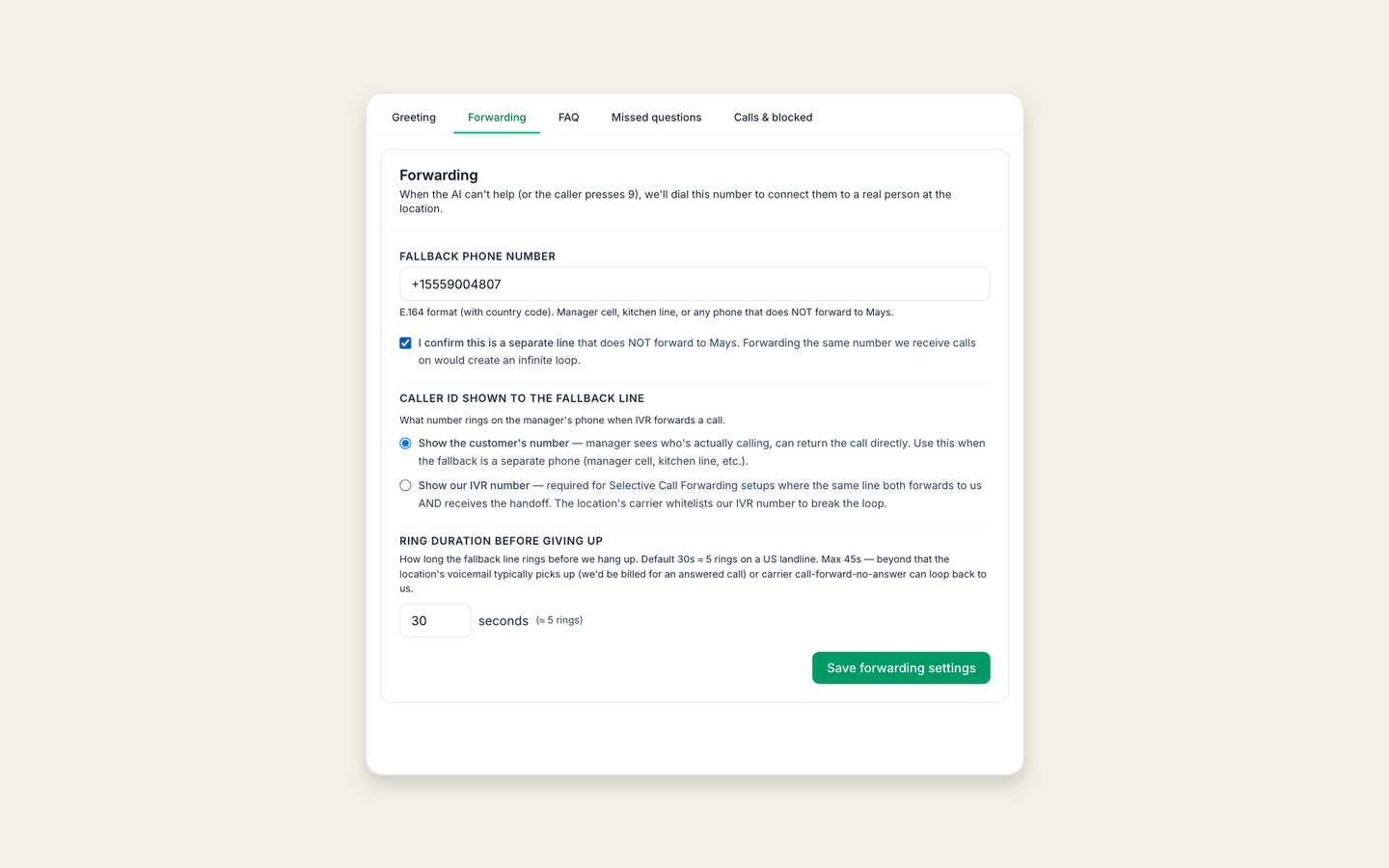
- Calls that don't pull anyone off the bar: with the AI receptionist add-on, the receptionist answers the questions you've added to its FAQ list, such as hours and parking, and a caller who needs a person, or presses 9, is forwarded to the fallback number you set on the Forwarding tab, such as the manager's cell (the image at the top of this post).
- House rules for the scheduling assistant: each location's Scheduling settings have an Auto-scheduler section. Write your rush rules there, such as how many people you need on bar and register from 7 to 10. The AI scheduling chat adds them to its instructions when you ask it to change a week, and nothing it does reaches staff until you publish. As the screen says, only the chat follows these rules; Generate schedule doesn't use them yet.
- Staff by the hour: the schedule's day view shows how many people are working each hour, so you can see whether the peak is covered before you publish.
- Units per hour: with a connected POS, the Forecast page can count the drinks you pick by hour and shows the projected peak hour, which is what bar staffing should follow.
- Prep to par: Prep Sheets list what to prep, with a par and the amount on hand, and suggest how much to make.
- Setup as a checklist: turn the setup table into an opening checklist template, with a photo answer where it matters, such as the full pastry case.
Your morning rush checklist
- Sales and drinks by hour for each weekday, with the peak half hour marked
- A line that doesn't block the door, a readable menu, and separate pickup for mobile orders
- Every station set up and stocked before opening, from a checklist
- One job and one backup task per person, and a "jump on" point for the line
- Someone other than the person on bar answers the phone during the rush
- Starts staggered to the peak, no breaks in it, and no new hire alone on a station
- One change at a time, then watch again
Get your rush ready in Mays
Plan the peak, staff it by the hour and check the setup before the doors open.
Start your free trial: 30 days, no card needed. Next in this series: order accuracy and remakes, how to track them and what they really cost.