Pre-shift huddle agenda template: a 10-minute team meeting before every shift
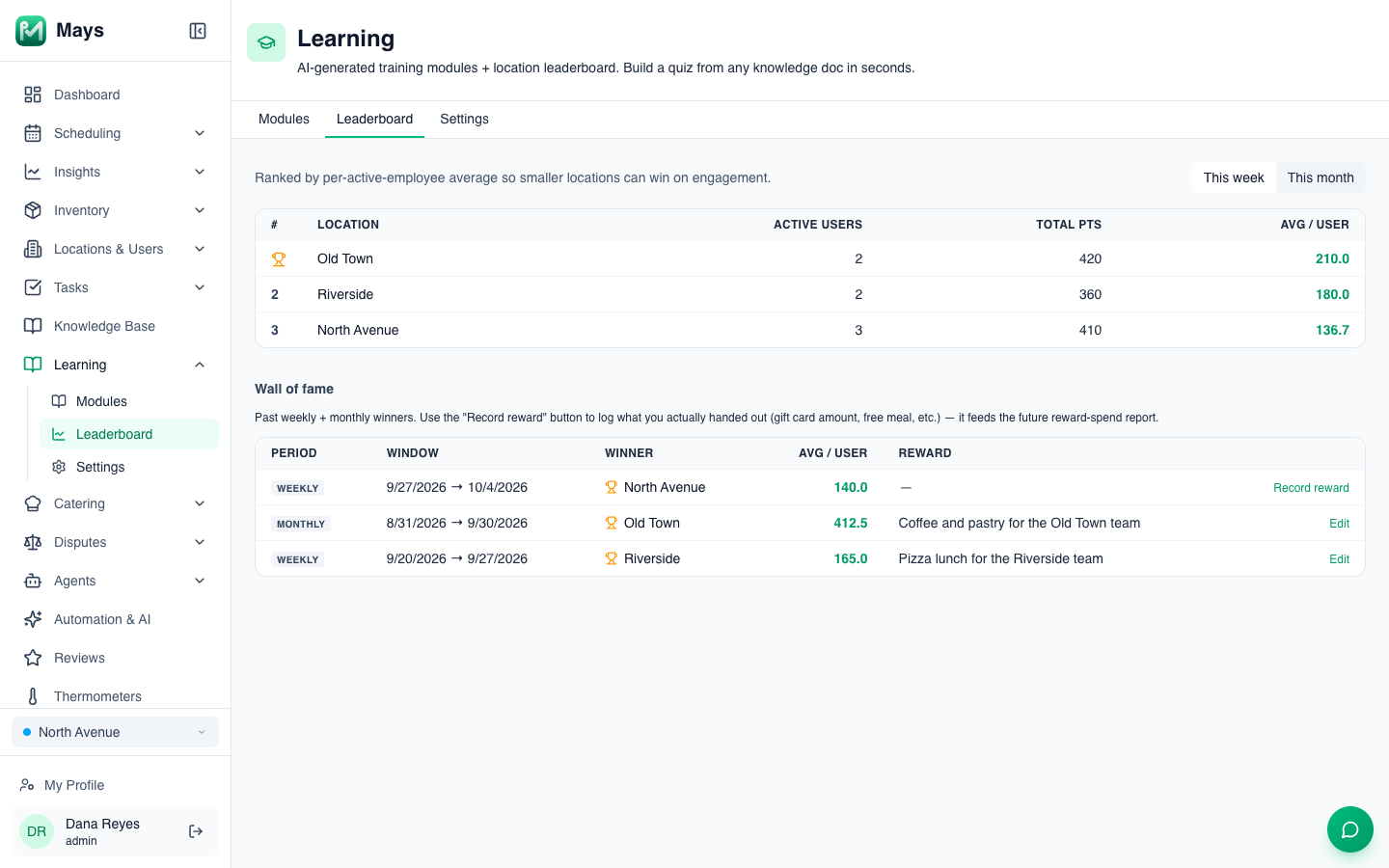
Here's a small habit worth building: before the doors open, everyone on the shift stands at the counter for ten minutes and hears the same plan. Who's on bar, what's 86'd, what the oat milk delivery means for lunch, and one food safety reminder. Without it, the plan lives in the manager's head and the team finds out at 7:15 with a line out the door.
This is the huddle for the whole shift. The managers' own weekly meeting is a different thing, covered in your weekly manager meeting.
Before you start: the huddle is paid time
Federal rules count meetings as work time unless all four of these are true: attendance is "outside of the employee's regular working hours", "in fact voluntary", "not directly related to the employee's job", and "The employee does not perform any productive work during such attendance" (29 CFR 785.27, eCFR). A huddle about the shift is directly related to the job, so it fails the third test on its own. And "Attendance is not voluntary, of course, if it is required by the employer" (29 CFR 785.28).
So: schedule the huddle inside the shift, and have everyone clock in first. If the shift starts at 6:30, the huddle is 6:30 to 6:40. States can add their own rules, so check yours.
The agenda
Minutes | Topic | What to say |
|---|---|---|
0:00 to 1:00 | Who's where | Stations, breaks, who's on register, who's closing. Name the person in charge if it isn't you |
1:00 to 3:00 | Yesterday and today | One line from the last shift's log (what broke, what ran out, a guest issue). Today's goal: a sales number, a catering order, an event nearby |
3:00 to 5:00 | Menu and 86 list | What's out, what's low, today's special, and its allergens. Any change to a recipe |
5:00 to 7:00 | Food safety focus | One topic from the rotation below, in two minutes, with a question for someone |
7:00 to 9:00 | Guests | One line from a feedback card or review, good or bad, and what we do about it today |
9:00 to 10:00 | Shout-out and questions | Name one person for something specific. Ask: "Anything I should know?" |
Rules that keep it at ten minutes:
- Same time, same place, standing up. Before doors open, or ten minutes before a shift change.
- One topic per slot. If something needs a discussion, write it down and talk after.
- Rotate who leads it. Shift leads run it on days the manager is off; it's good practice for them.
- Write it down. The huddle sheet below takes one minute to fill in, and it tells the next manager what the team already heard.
The food safety rotation
Ten topics, one a day, over two weeks. Each is a two-minute talk and one question for someone on the team.
Day | Topic | Question to ask |
|---|---|---|
1 | Handwashing: when and how long | "When do you wash after taking out the trash?" |
2 | Reporting illness | "You threw up last night. What do you do?" (Our illness reporting chart has the answer) |
3 | Allergens on today's menu | "A guest has a sesame allergy. What can they have?" (See the allergen matrix) |
4 | Hot and cold holding | "The soup reads 128. What now?" (See the temperature log sheet) |
5 | Date marking and labels | "How long can the house-made dressing stay in the walk-in?" |
6 | Sanitizer: strength and test strips | "What should the strip read?" |
7 | Bare-hand contact with ready-to-eat food | "Which items do we always touch with gloves or tongs?" |
8 | Cleaning up vomit or diarrhea | "Where's the clean-up kit?" |
9 | Receiving and recalls | "A recall notice comes in. Who do you tell?" (See the recall checklist (coming Oct 28)) |
10 | Food defense | "Someone you don't know is in the back. What do you do?" |
These aren't random. The FDA Food Code makes the person in charge responsible for employees being "properly trained in FOOD safety, including FOOD allergy awareness, as it relates to their assigned duties" (§2-103.11(O)), and for employees being "informed in a verifiable manner of their responsibility to report" illness (§2-103.11(P)). The 2026 edition adds a new duty: employees "are aware of FOOD DEFENSE, such as signs of intentional acts of ADULTERATION as it relates to their assigned duties, and report suspicious activity to the PERSON IN CHARGE" (§2-103.11(R)). A huddle won't replace training, but it keeps it fresh.
The huddle sheet
Print a pad of these, or keep them in the logbook.
Field | Fill in |
|---|---|
Date, shift, location | |
Led by | |
Present (initials) | |
Stations and person in charge | |
From the last shift | |
Today's goal | |
86'd and low | |
Special and its allergens | |
Food safety topic, and who answered the question | |
Guest line | |
Shout-out | |
Questions raised, and who follows up |
The "present" line matters for the illness topic: initials on a dated sheet show who heard it. For the Food Code's "verifiable" standard, though, a signed reporting agreement or a passed training is stronger evidence; see the illness reporting post.
Where Mays fits
- What happened last shift. Scheduling → Logbook shows each day's entries for the location, and the Follow-ups tab lists everything still flagged. Read the top one at the huddle. See The manager logbook.
- The shout-out. Learning → Leaderboard ranks your locations by quiz points per active person, this week or this month, with a Wall of fame of past winners and the reward you recorded (the image at the top of this post). Quizzes earn the points; tasks don't. See Points, badges and leaderboards.
- The food safety topic, after the huddle. Put each topic in a short training module and assign it. Snap quizzes then send one question at a time to people on a published shift, at most once a day, inside the hours you set under Learning → Settings (entered in UTC for now). See Snap quizzes and Assigning training.
- The talking points. Keep the rotation and the week's specials in a Knowledge Base article everyone can read on their phone. See Knowledge Base basics.
- The follow-ups. A question raised at the huddle becomes a one-off task for one person under Tasks → Create Task → Custom Task. See Creating one-off tasks.
What Mays doesn't do: there's no huddle screen or attendance sign-in, so the sheet still records who was there.
Ten minutes, every shift
A huddle costs ten paid minutes per person per shift. It pays that back the first time nobody has to ask what's 86'd while a guest waits.
Start your free trial: 30 days, every module, no card needed. Or book a walkthrough and we'll set up the logbook and the training rotation with you.